How to Evaluate Midfield Control Before a Football Match
The more I watch games, the clearer this becomes: midfield control is the quietest deciding factor in football. Everyone says the midfield lost the match, but very few people can point to the exact moment it was lost. In this guide, I want to walk you through a practical method for evaluating midfield control before a match—before a single pass is played.
Three findings keep showing up. First, possession numbers deceive: a team can hold 60% of the ball in harmless areas and still be losing the midfield battle. Second, the first 15 minutes reveal a team's true midfield plan more honestly than any pre-match stat sheet. Third, most midweek predictions fail because the analyst overrates one star player and ignores the supporting structure around him.
The New Viewer's Trap: Confusing the Ball with Control
Picture a new viewer opening a match. She sees one team passing sideways across the backline and the goalkeeper rolling the ball to the centre-backs. She assumes that team is controlling midfield. In reality, the team may be trapped in its own half, with no passing line between the central defenders and the forward line. That sideways passing is not control; it is a response to pressure.
Control in midfield is about three things: where the ball is won, how fast the ball moves, and which team chooses the tempo. A low-block team with 35% possession can control a game by forcing the opponent wide and winning every second ball. A patient side can control a game by keeping possession, but only if that possession moves forward. The viewer who mistakes ball time for control will make the same error in every match she reads.
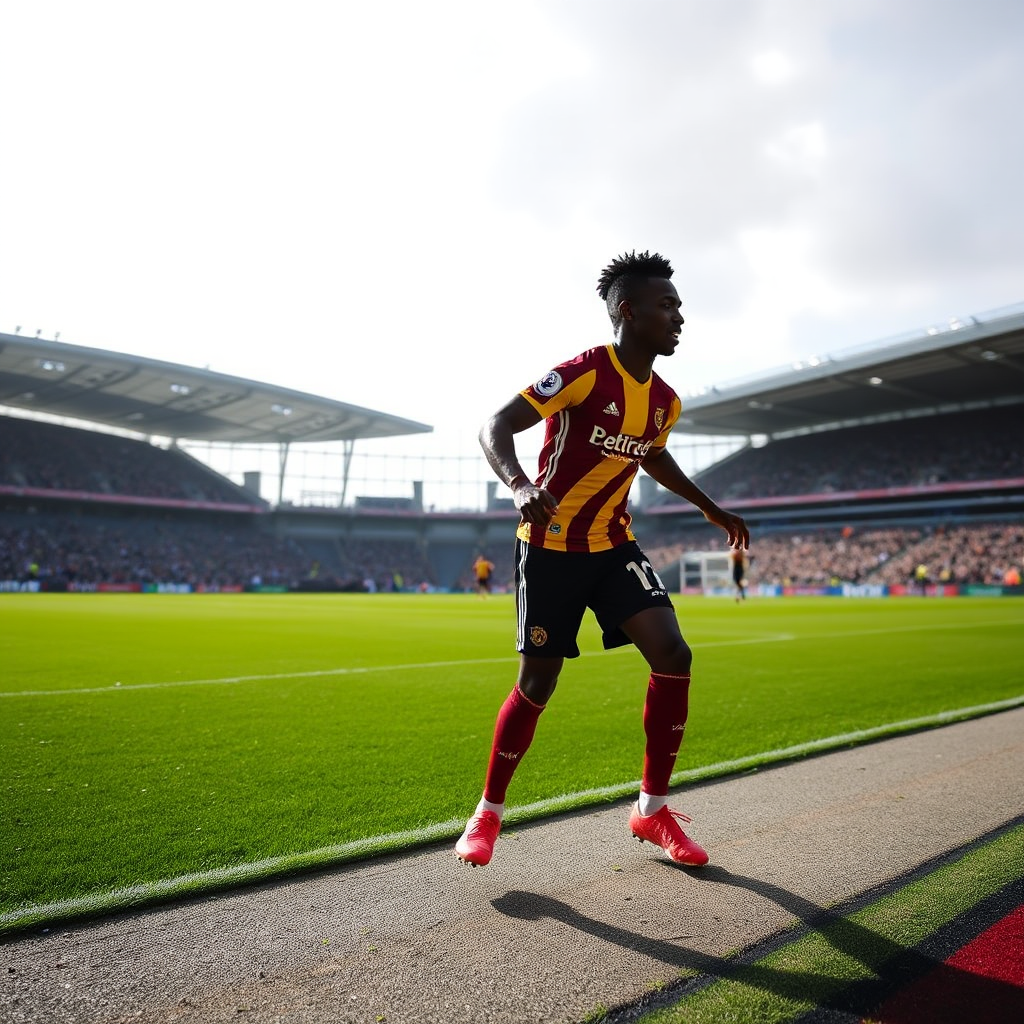
 Hình minh hoạ: tkbet এর
How to Read a Midfield Before Kickoff, Step by Step
You can evaluate midfield control without watching a single minute of the match. The trick is to build a clear picture from six small steps.
- Build the expected formation from the lineup, not from the fixture. A team that rested four starters last weekend may send a completely different midfield this weekend. If the lineup is not out yet, draw two possible shapes for each side.
- Find the anchor. Pick the player who receives the most passes, then find who covers him when he steps forward. A cover with poor range means a slow, safe midfield.
- Map the pressing trigger. Watch the striker's angle to the first pass. If he cuts off one lane and forces play to a weaker side, the midfield is built to funnel the opponent.
- Look at the full-backs for width, not the wingers. High full-backs open central space; deep full-backs squeeze the middle into a crowded fight.
- Count the actual central bodies. A 4-3-3 may defend like a 4-1-4-1. Count how many players actually stand between the boxes and decide which ones are real midfielders.
- Weigh fixture context. A short turnaround, an away trip, or a red-card suspension changes intensity more than any shape. Rest is the raw material.
If you are comparing notes across multiple sources, you can check the match analysis at tkbet এর to see how another observer frames the same midfield matchup. Treat any such preview as a starting point, not as a confirmed plan.

A Quick Reference Table for Midfield Signals
Once you have the shape, you need moments to judge it. This small table lists the signals I scan in the first quarter of a match.
| Midfield signal | What it suggests | Why it matters |
|---|---|---|
| Deep two-man block, no pressure on the ball | The team deliberately surrenders the first pass | They control the tempo by slowing the game and attacking space |
| Single pivot without a second cover | A high-risk system that relies on quick recovery | One turnover in the middle can break the whole team open |
| Wingers tucked inside near the number ten | The side tries to outnumber the centre | The opponent's full-backs will be exposed or forced to stay deep |
| Short goal-kicks into the midfield zone | Build-up is planned, but it is also a challenge to the press | If midfielders are careless on the first contact, chaos follows |
| Two box-to-box runners aiming for the second ball | The match will be decided in 50-50 duels | Control can change hands several times within one passage |
| A free-floating attacker dropping between the lines | The attacking side creates an extra man centrally | The defending midfield must choose who tracks him, and that choice opens gaps |
Five Errors That Kill a Midfield Read
The steps above are simple. The errors that follow are why so many previews still get the midfield wrong.
- Rating the name instead of the shape. A world-class midfielder on the wrong side of the pitch is a weakness, not a weapon. Check where he stands, not how famous he is.
- Treating possession as proof. Holders of the ball can be under full control of the opponent. Watch the forward progress, not the pass count.
- Forcing the pre-match read onto the first 15 minutes. The opening quarter hour is a separate event. I call it the tkbet 15 in my match notes: a short window that shows you whether the midfield structure you predicted actually fits the lineup on the pitch. If the shape is wrong, adjust early.
- Ignoring rotation and fixture congestion. A tired midfield plays five minutes slower in the second half, and no tactical diagram can fix that. Check the previous match and the next one.
- Judging a team by its best possible eleven. The manager may rest a midfielder to protect him for a bigger fixture. Evaluate the likely eleven, not the fantasy one.

The Action Plan: From Read to Decision
You do not need to build an entire scouting system. A simple sequence is enough to improve your reading before each match.
- Write down your expected midfield shape before the lineup announcement.
- Update it the moment the official lineup appears.
- Choose one midfield signal to watch in the first 15 minutes—for example, who wins the first three second balls.
- Decide your stake based on the risk, not on how clever you feel. Set a loss limit before the match starts and respect it.
- If no clear edge appears, skip the bet. Skipping is always a valid result.
No form of match analysis guarantees a single outcome. You are estimating probabilities, not collecting certainties. That is why bankroll limits and risk awareness matter more than any midfield read you will ever make.
The Risks That Do Not Disappear After a Good Read
A correct midfield read can still lose to one half-chance. That is football.
Remember three risks. First, a single defensive mistake or a deflected shot can decide a tight game, and your read may be completely right. Second, in-game injuries and sudden substitutions can change midfield control within a minute, so treat any long-term projection as a weak estimate. Third, a few successful reads create false confidence, and that confidence often leads to larger stakes. The safest habit is to treat every stake as money you are prepared to lose and to stop when discipline weakens. Midfield control is a useful filter, but it is not a promise.